
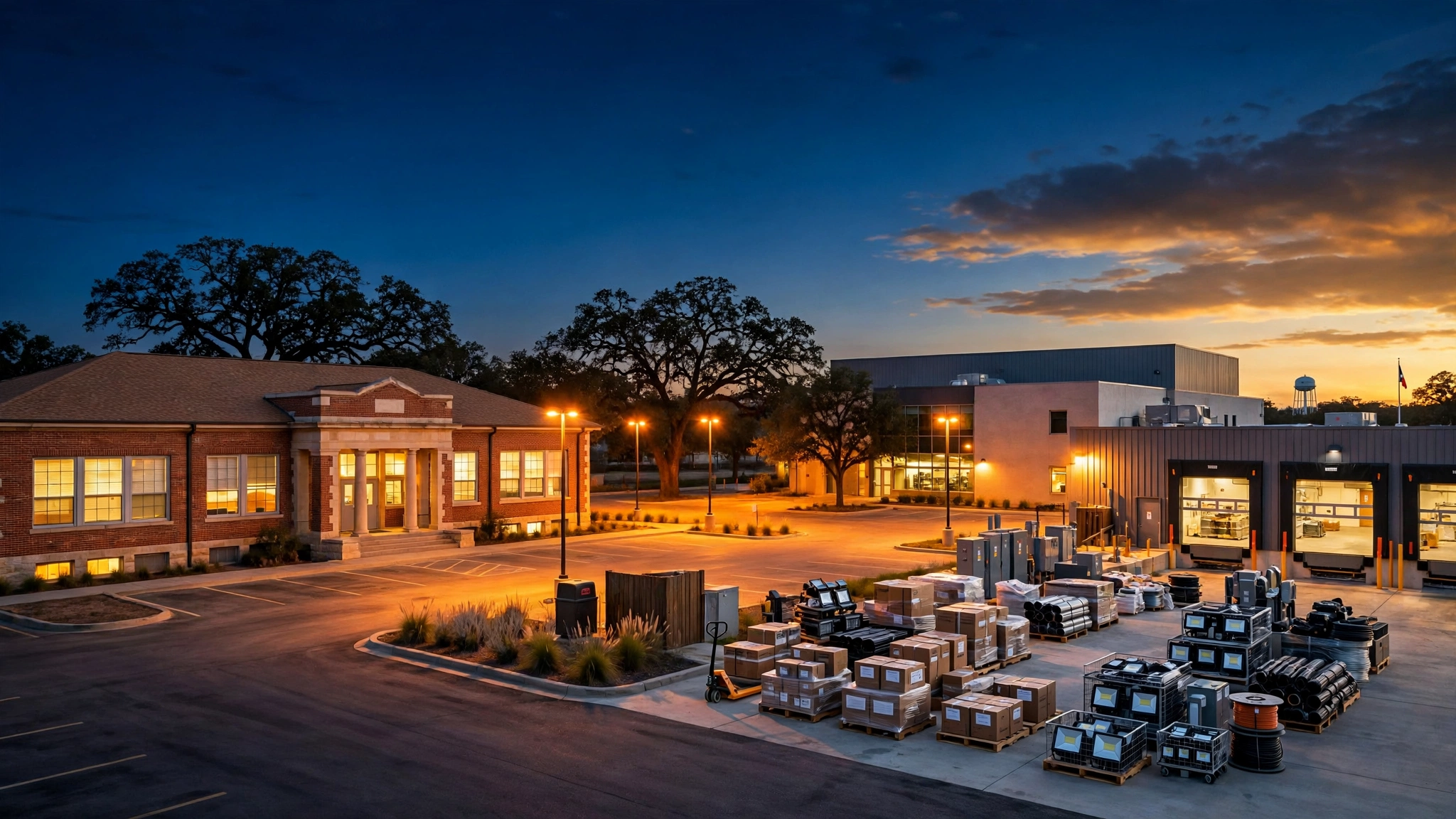
Schools and cities buy electrical and lighting products for classrooms, offices, gyms, parking lots, streets, and maintenance shops. A cooperative contract gives a supplier one awarded contract that member agencies can order from. The contract lists the product scope, the pricing basis, and the delivery terms agencies use when they place an order.
What schools and cities buy in this category
Electrical and lighting categories cover daily maintenance and project products. The invitation defines the scope for that cycle, and a supplier should propose only products it stocks or can supply on the stated terms.
- Lighting products. Interior fixtures, LED lamps and tubes, exterior and parking lot fixtures, emergency lighting, and exit signs.
- Electrical supplies. Wire, conduit, breakers, panels, switches, receptacles, ballasts, drivers, and controls used by maintenance staff.
- Project products. Fixture packages for renovations and lighting upgrades, priced as line items or from a catalog.
- Delivery and support. Delivery to campuses and city facilities, warranty handling, and product information on specifications and compatibility.
Agencies order on different schedules. A district may replace lamps across several campuses in the summer, while a city may order street and parking lot lighting through public works during its fiscal year.
How pricing and specifications work
Pricing in this category usually combines a catalog discount with line item prices for specific fixtures or project items. The supplier states the catalog it uses, the discount for each product group, and any delivery charges. Fixture specifications matter in evaluation. Agencies check wattage, light output, color temperature, listings, and compatibility with existing systems before they order.
Product lines change often. Manufacturers discontinue lamp and fixture models, replace them with new versions, and update price files during the year. A supplier needs to record which catalog version its proposal uses, so filed pricing can be checked later against the same source.
The internal overhead for a supplier
The cooperative process adds specific work inside the supplier company. Staff spend hours building catalog pricing files across hundreds of lighting and electrical items, and that work goes stale when a manufacturer updates prices or discontinues a model between cycles. Staff then rebuild discount tables and check that replacement models still meet the specifications in the proposal.
Office staff also gather insurance certificates, business forms, tax forms, and signed certifications, and several of those documents expire on their own schedules. Reference lists and recommendation letters add date tracking, because a letter dated outside the window the invitation allows does not count. Addenda arrive during the open period and can change fixture specifications, product groups, or required forms. One person has to watch for those notices, record each change, and update the proposal file before the deadline. Sales planning also shifts around cycle timing and school calendars, because much campus lighting work is scheduled for summer months when buildings are empty.
Orders after an award
After an award, member agencies contact the supplier directly and order under the contract pricing. The agency issues its own purchase order, and the supplier confirms stock, lead time, and delivery location. Maintenance orders tend to be smaller and frequent. Project orders tend to be larger and tied to a renovation schedule.
What Tejas Cooperative Partners does
Tejas Cooperative Partners helps electrical and lighting suppliers read the invitation for the categories they want to pursue. The firm builds the proposal file, tracks deadlines and addenda, checks document and letter dates against the invitation rules, and records the submitted catalog pricing so the supplier has a clean copy for the next cycle. After an award, the firm helps the supplier plan outreach to the school districts and cities that buy these products in its service area.
Tejas Cooperative Partners is an independent consulting firm. It is not a cooperative, it is not affiliated with BuyBoard, TASB, or TIPS, and it guarantees no award and no sales level.